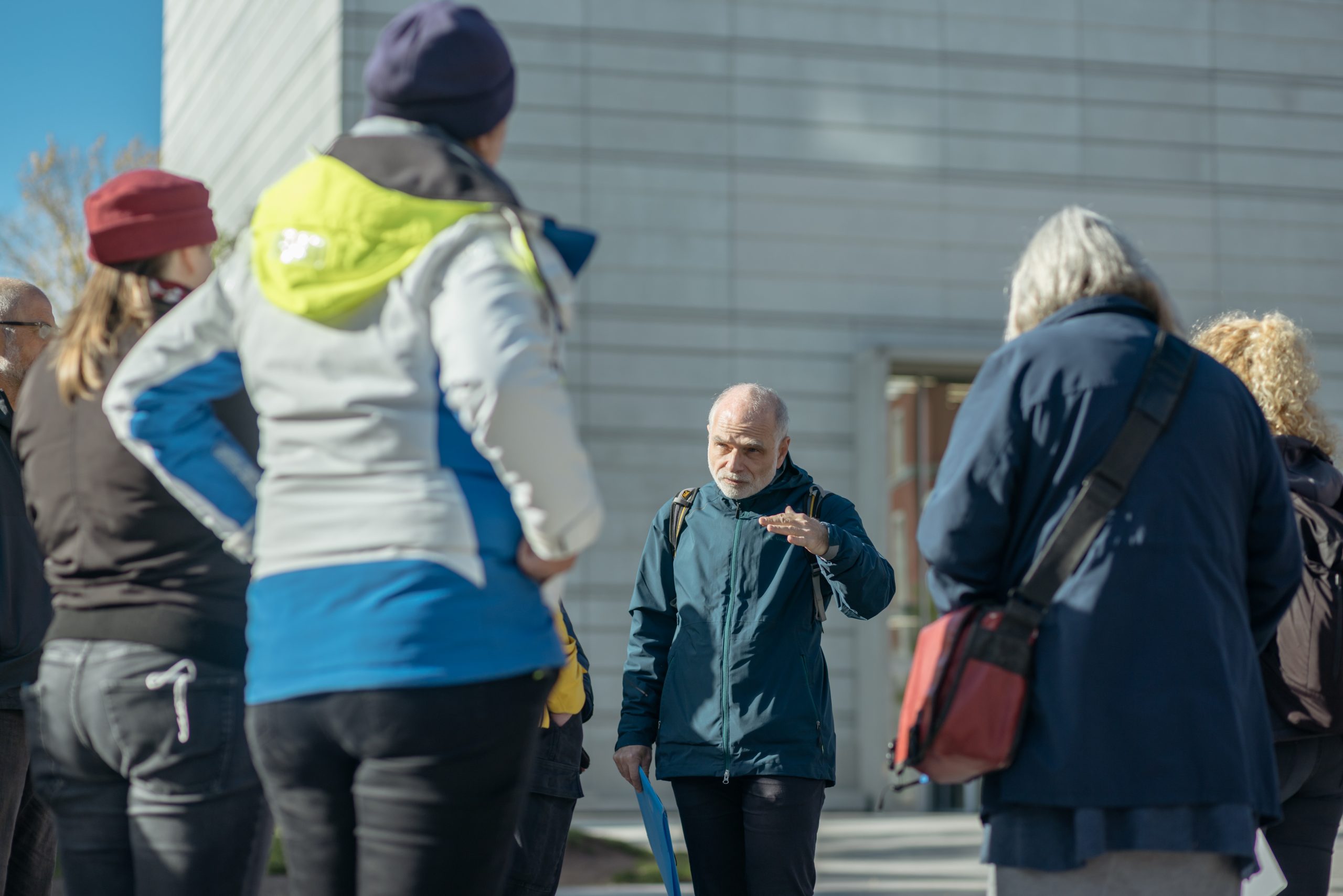
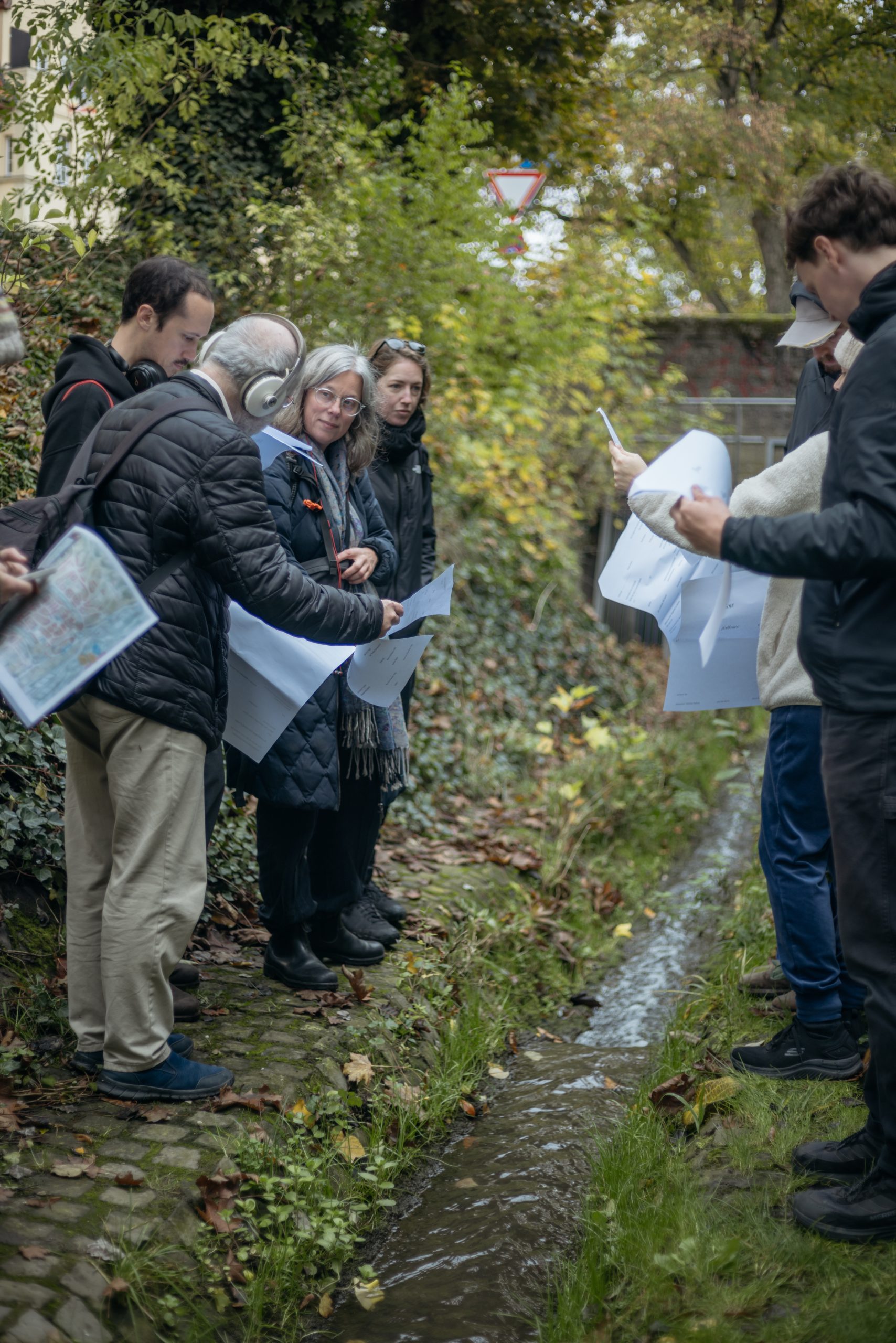
FLUTEN Art, Environment, Exchange was a multi-site, interdisciplinary art project that unfolded as a city-wide narrative about water, flooding, and ecological relations in Weimar, Germany. Initiated by Stockwerk e.V. through Katja Schäfer (chair of the association) and Cosmo Schüppel (Artistic Direction) the Project involved over 50 international Artists and Researchers in 7 Locations throughout the whole City of Weimar for one month. It presented itself as a distributed framework structured along a temporal dramaturgy that followed different states of a flood: before, during, and after. Each location functioned as a chapter within this overarching narrative, while a collective opening walk physically connected the sites and guided visitors through the project as a sequence of spatial and experiential transitions. This structure was expanded through additional formats such as performances, workshops, participatory works, and a graphic novel distributed throughout the city, turning FLUTEN into both an exhibition and an embodied urban journey.
At its core, the project positioned water not only as a natural force or catastrophic event, but as a relational medium that exposed the entanglements between humans, infrastructures, and ecosystems. Flooding was approached as a moment of rupture that revealed vulnerability, loss of control, and ecological imbalance, while also functioning as a lens to understand hidden dependencies and environmental impact. At the same time, FLUTEN extended beyond the moment of crisis, asking what could be learned from such events and how forms of resilience, adaptation, and coexistence might emerge in their aftermath. Across its formats, the project emphasized collective experience, ecological awareness, and speculative as well as practical approaches to living with climate realities.
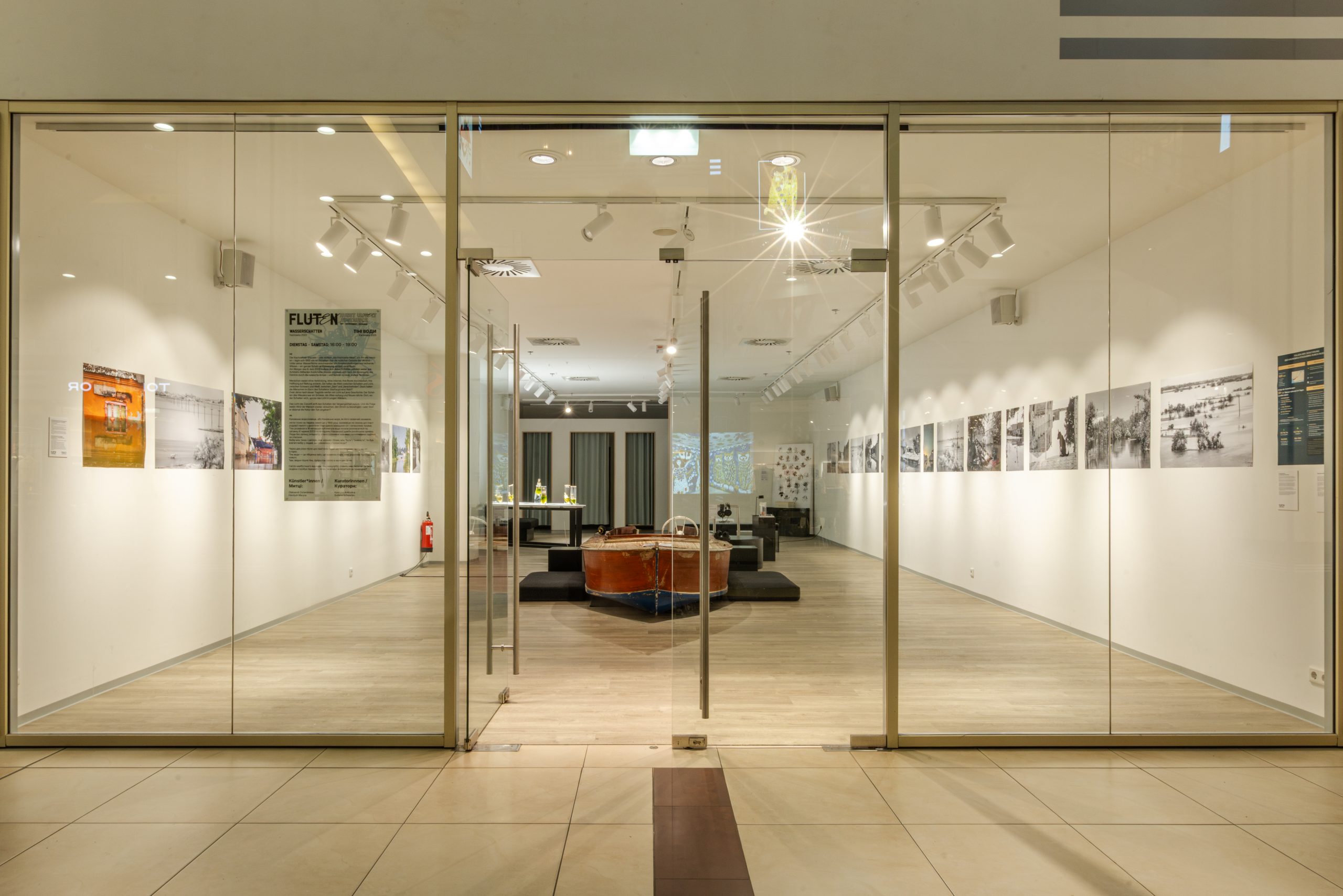
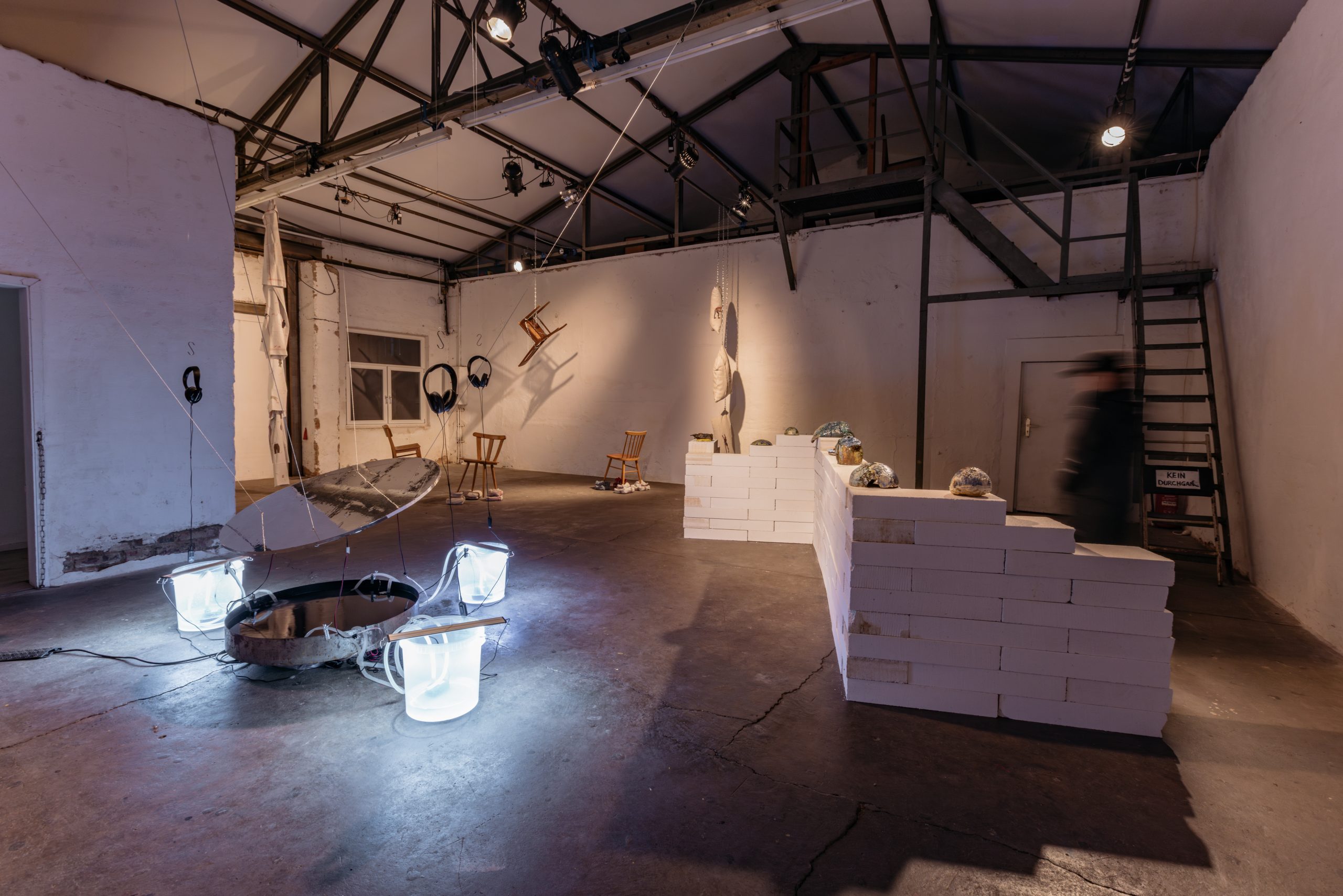
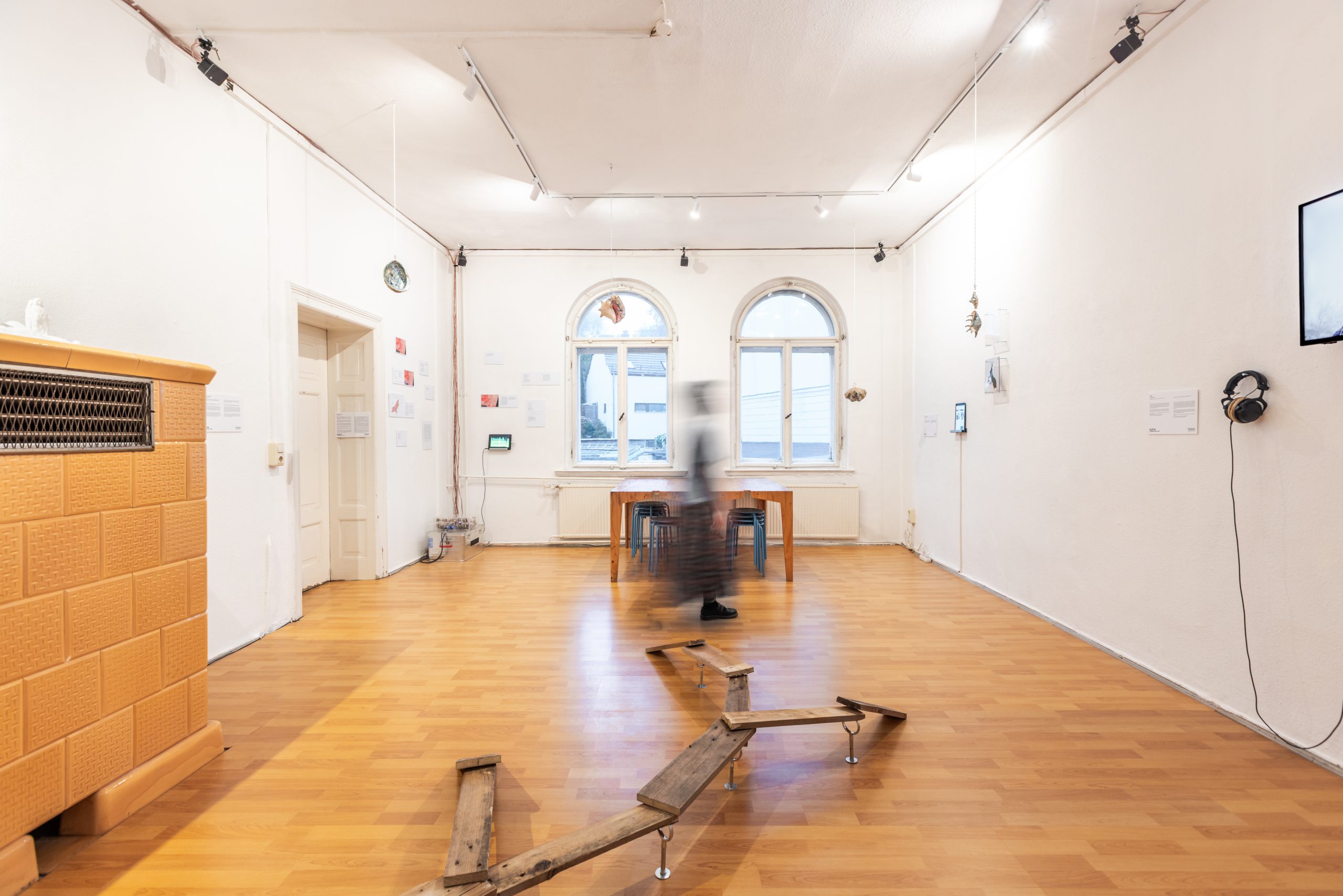
The project unfolded across several key venues in Weimar, each contributing a distinct perspective. At Galerie Eigenheim, the exhibition Water, Waste, and Weakness, curated by Konstantin Bayer, focused on the state of being within the flood, immersing visitors in an atmosphere of disorientation and fragility through installations, video, sound, and sculpture by artists including Victor López González, Nina Röder, and Gökçen Dilek Acay. At Stockwerk Galerie, Permeable Learnscapes, curated by Giuliana Marmo, addressed the aftermath of flooding through reflection, learning, and collective imagination, combining artworks with workshops, performances, and educational formats. Gaswerk e.V. contributed to the “before the flood” chapter by focusing on everyday and often unnoticed interactions with water, presenting performative and participatory works that invited visitors to engage directly with water as a material and social element. Additional venues expanded the project further: the Sporthalle “Tonne” hosted a collaborative skating performance developed with ESC Erfurt e.V. that responded to regional flood experiences, while the Weimar Atrium presented WASSERSCHATTEN, linking local perspectives to global flood events such as the destruction of the Kakhovka dam in 2023.
Overall, FLUTEN emerged as a process-based, city-wide exhibition that transformed Weimar into a site of ecological storytelling. By connecting multiple institutions, artistic practices, and audiences, it constructed flooding not as an isolated disaster, but as a temporal and relational condition—one that unfolded across time, space, and collective experience.
The Project was funded by FONDS Soziokultur and the Beauftragte der Bundesregierung für Kultur und Medien, the Landesverwaltungsamt des Freistaats Thüringen, the City of Weimar, the Kreativfonds of Bauhaus Universität-Weimar and Studierendenwerk Thüringen. Additionally it was supported by ESC Eissportclub Erfurt e.V., Lebenshilfewerk Weimar/Apolda e.V. and Batzner Hagebauprofis.
Photo Credits: Peechana Chayochaichana