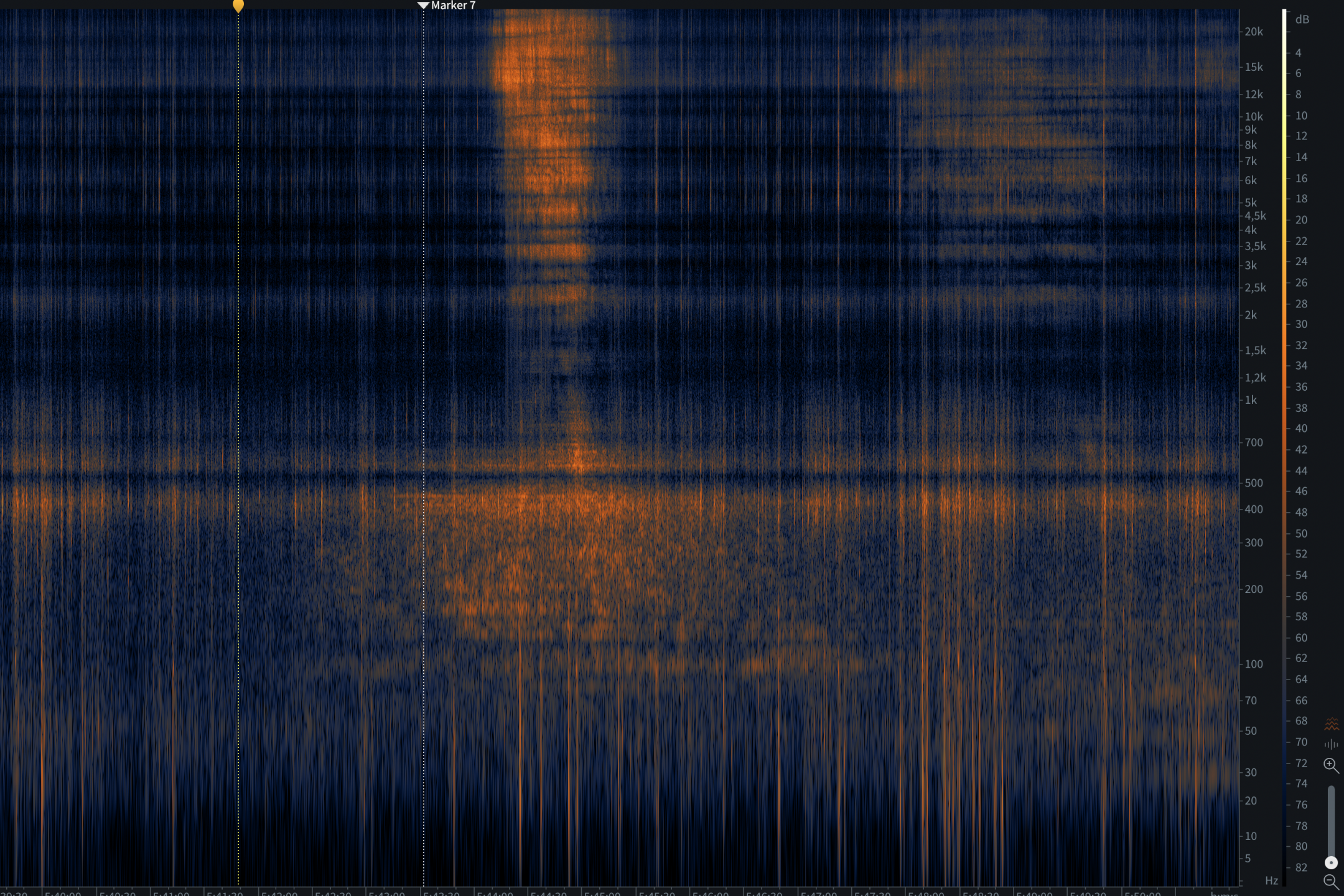
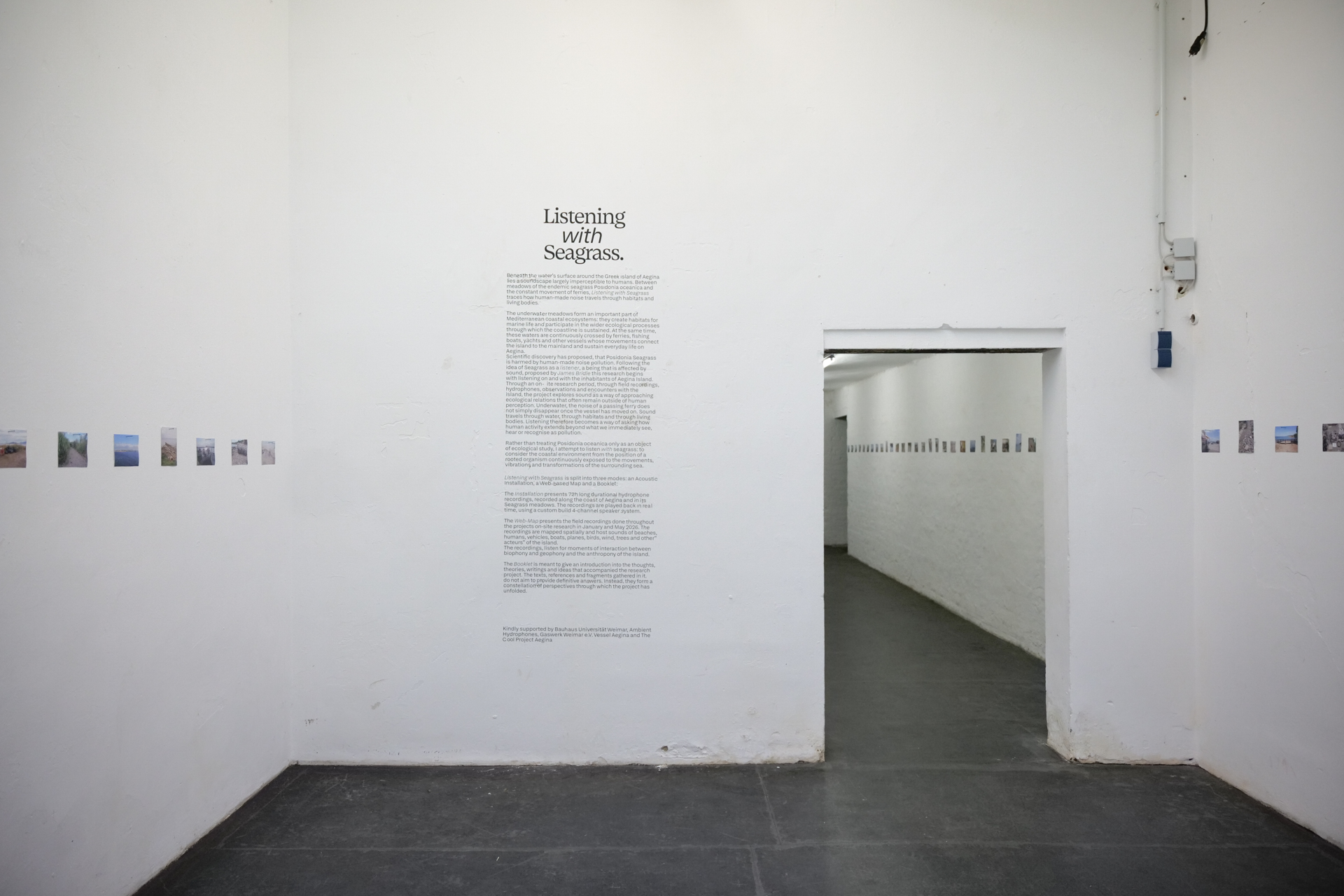
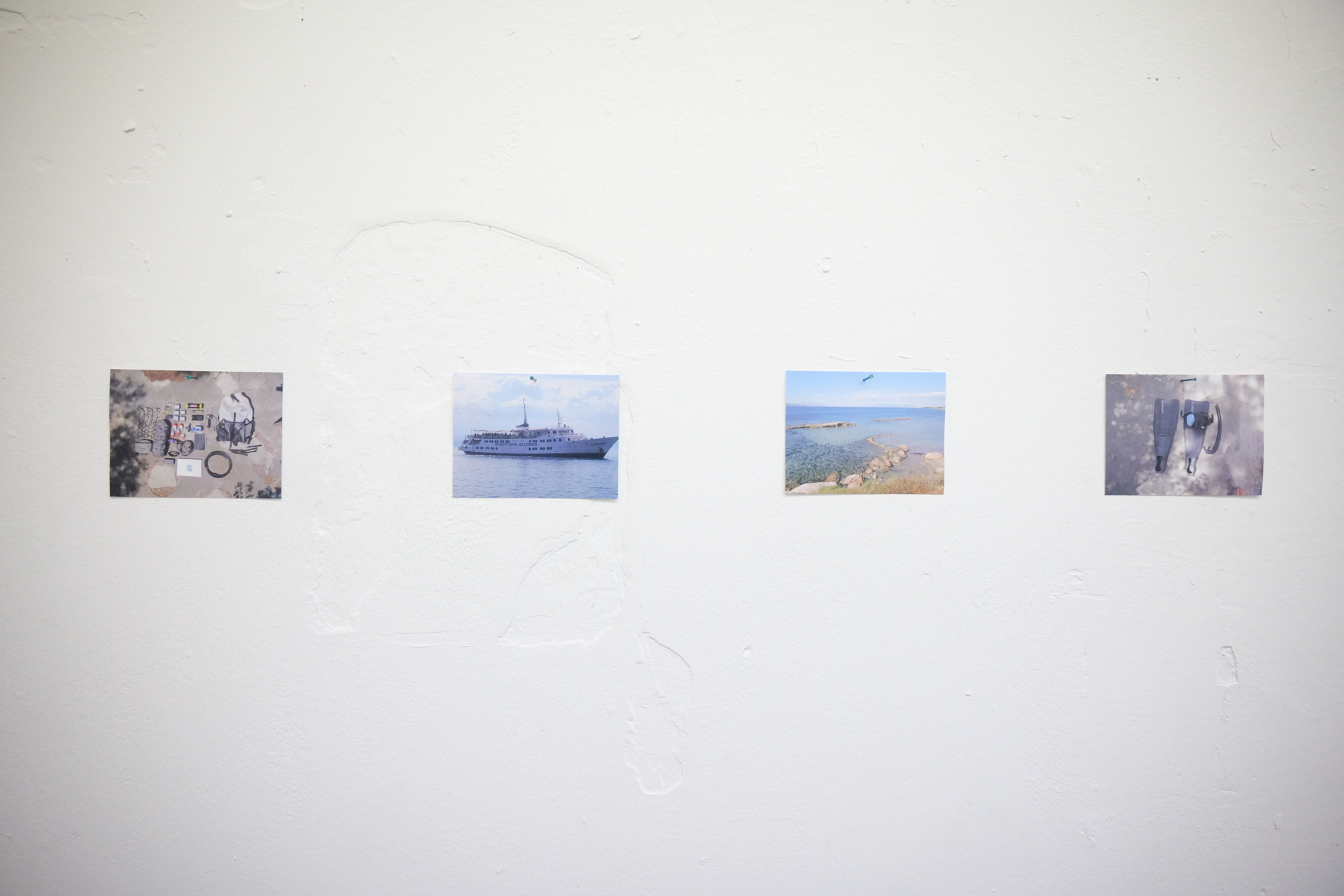
Beneath the water’s surface around the Greek island of Aegina lies a soundscape largely imperceptible to humans. Between meadows of the endemic seagrass Posidonia oceanica and the constant movement of ferries, Listening with Seagrass traces how human-made noise travels through habitats and living bodies. Scientific discovery has proposed, that Posidonia Seagrass is harmed by human-made noise pollution. Following the idea of Seagrass as a “listener and recorder”, proposed by James Bridle this research begins with listening on and with the human and non-human inhabitants of Aegina Island.
The project Listening with Seagrass is split into three modes: an Acoustic Installation, a Web-Based Map and a Booklet:
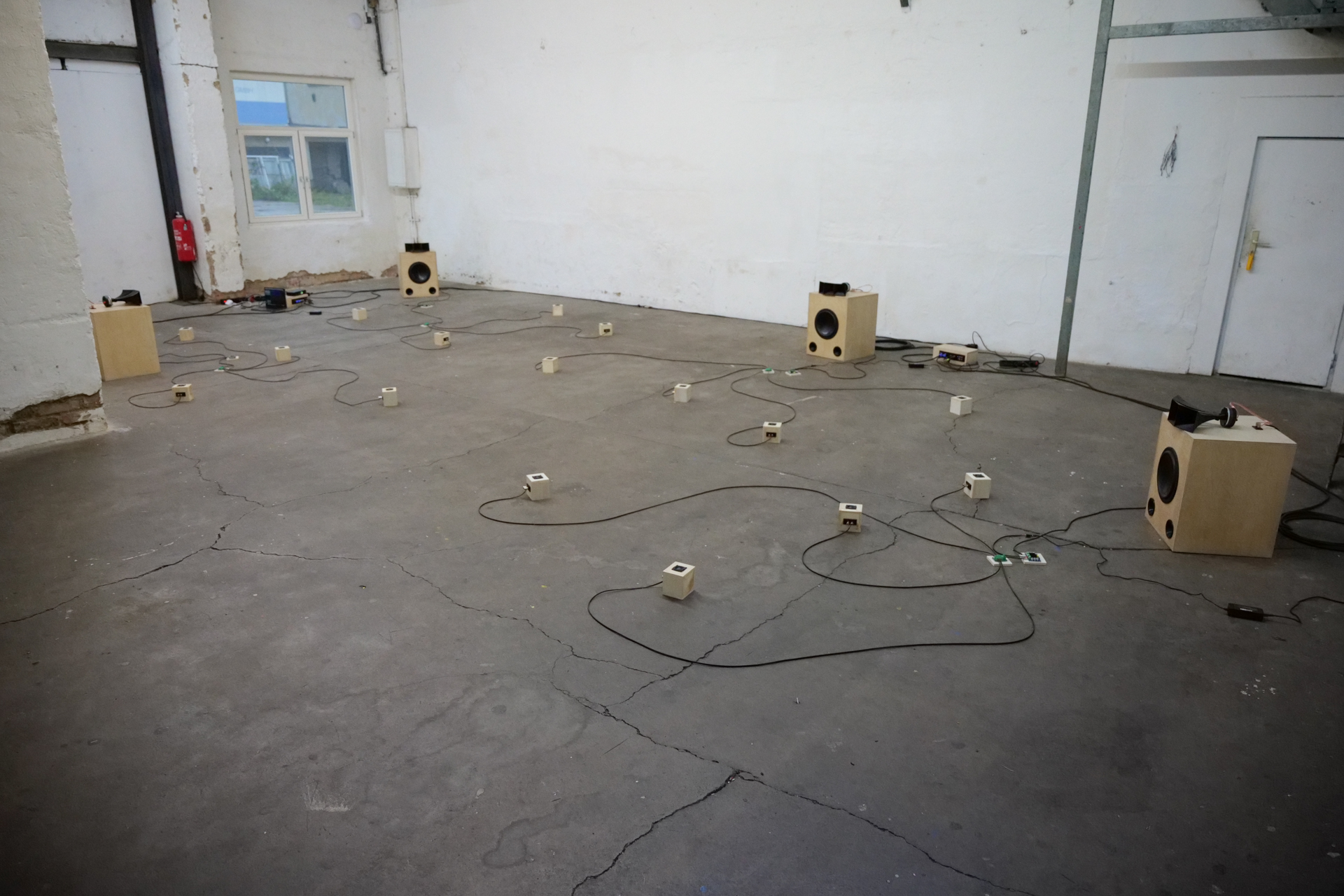
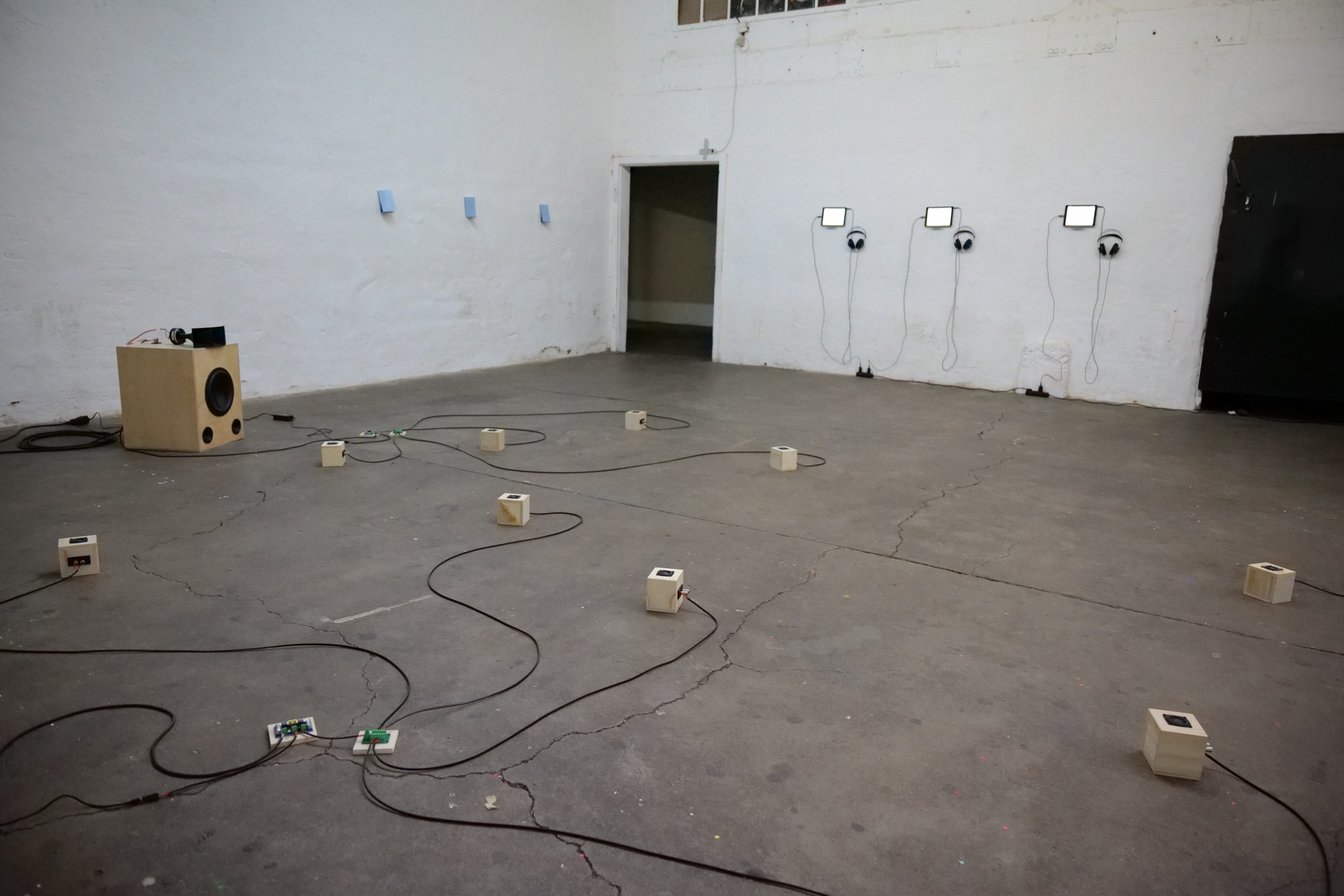
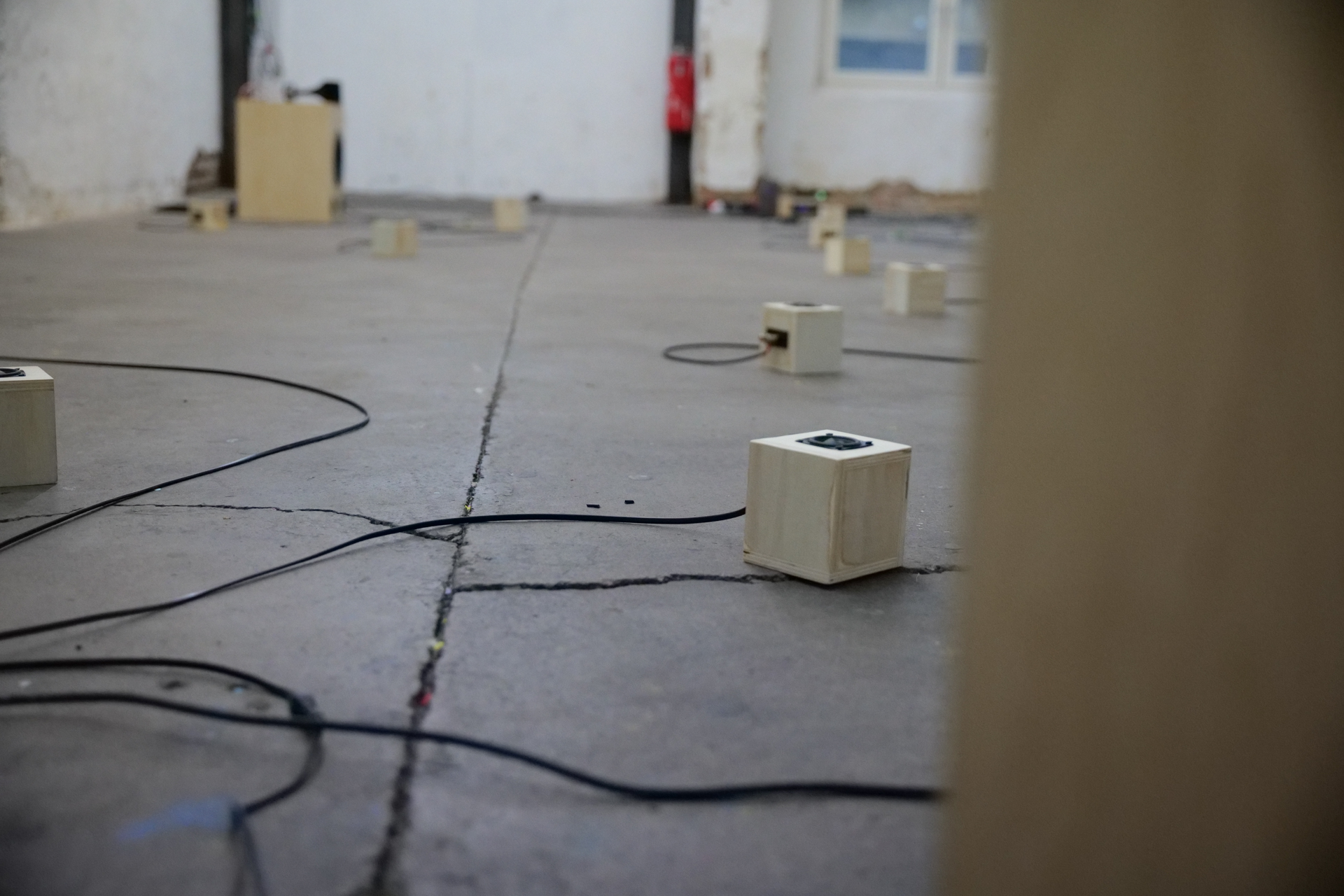
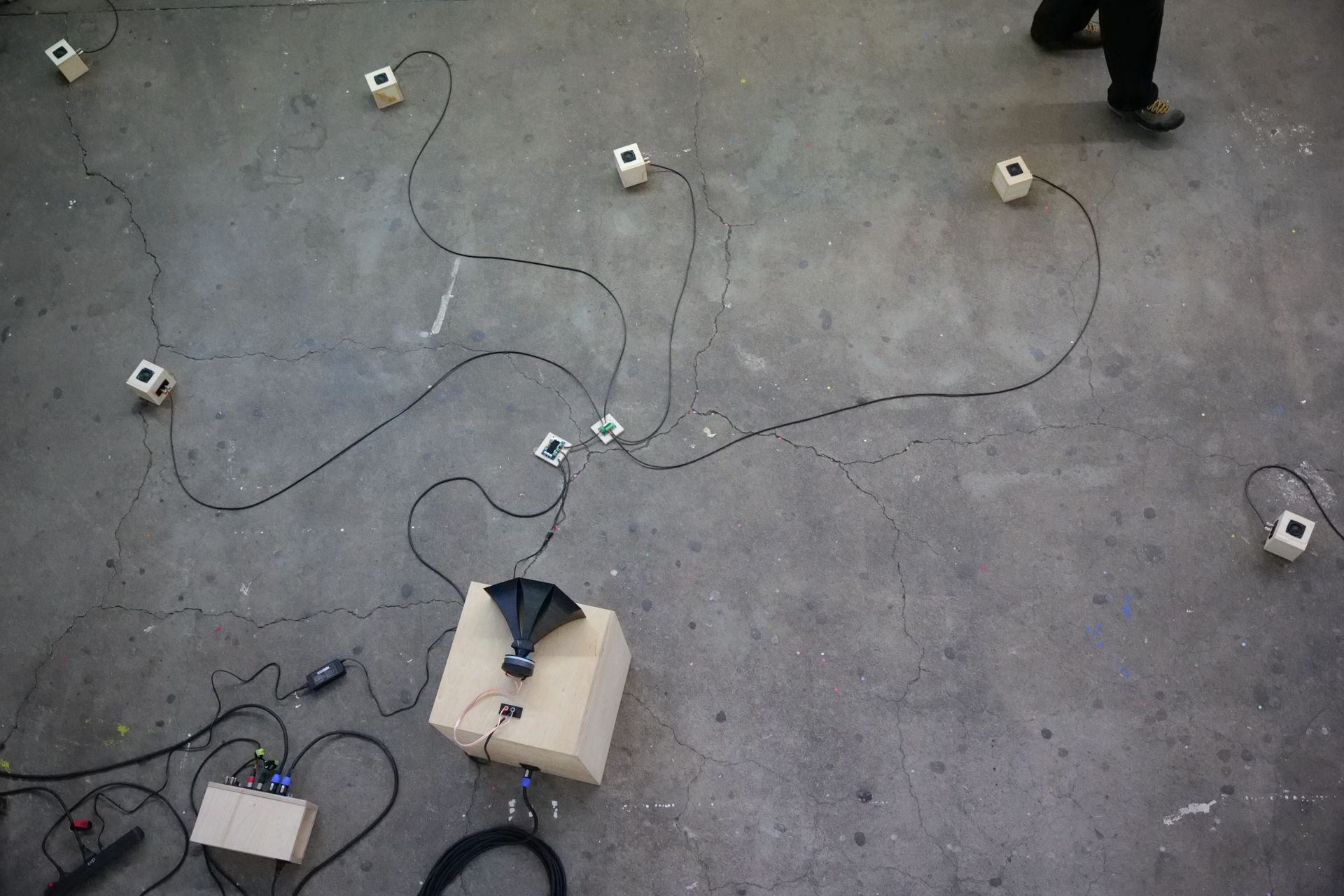
The Installation presents 72h long durational underwater recordings, recorded along the coast of Aegina and in its Seagrass meadows. The recordings are played back in real time and give insight on the relation between organic sounds and the noise-pollution of the sea.
The Web-Map presents the field recordings done throughout the projects on-site research in January and May 2026. The recordings are mapped spatially and host sounds of beaches, humans, vehicles, boats, planes, birds, wind, trees and other acteurs of the island.
They listen for moments of interaction between biophony and geophony and the anthropony of the island. www.cosmoschueppel.de/aegina-sound-map
The Booklet is meant to give an introduction into the thoughts, theories, writings and ideas that accompanied the research project. The texts, references and fragments gathered in it. do not aim to provide definitive answers. Instead, they form a constellation of perspectives through which the project has unfolded.
Kindly supported by Bauhaus-University Weimar, Ambient Hydrophones and Vessel Aegina.
Exhibited in October 2026 in Gaswerk e.V. Weimar.
A big thank you to everyone that supported the making of the project! Especially Passion Asasu, who was involved in every part of the project.